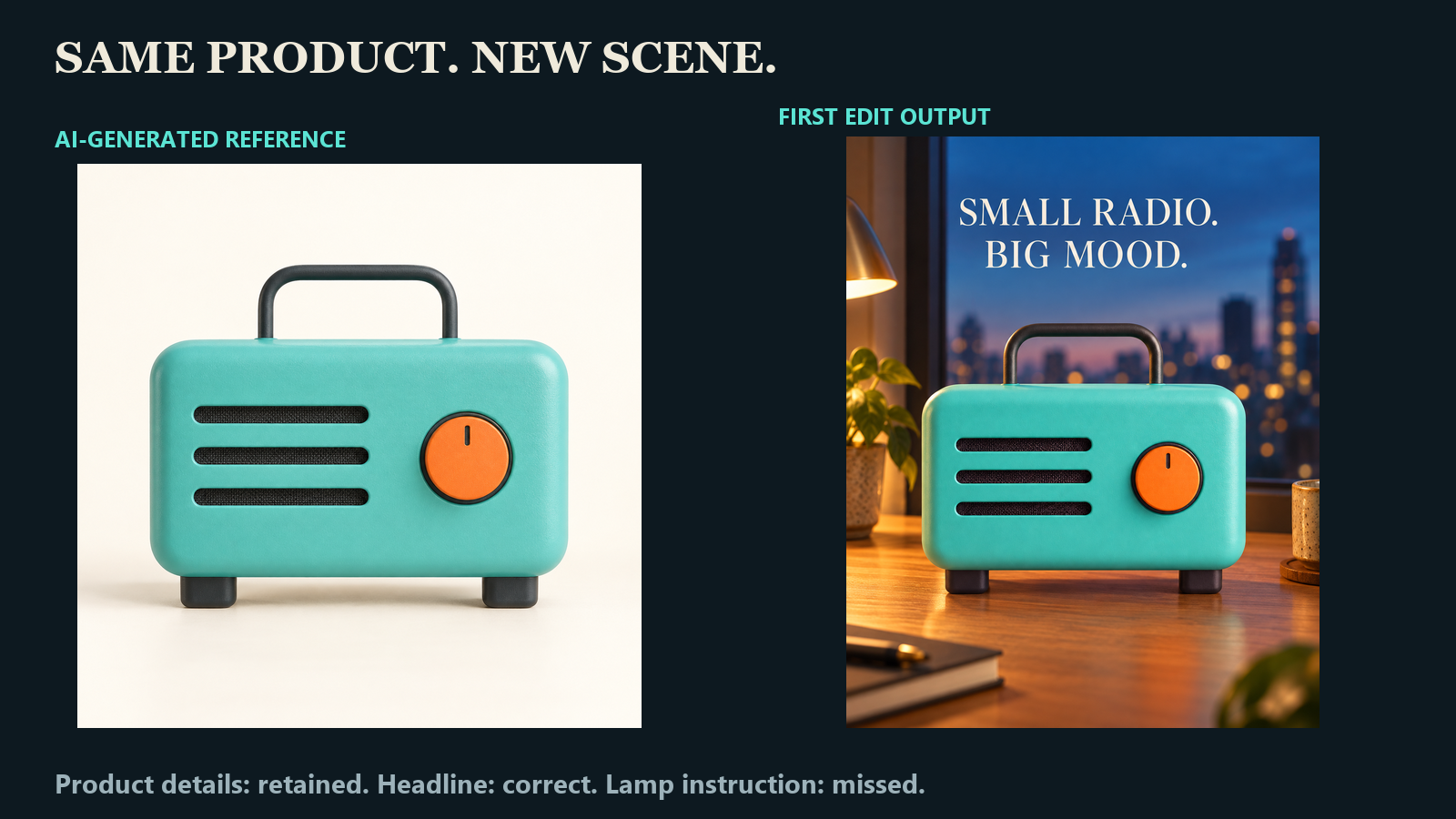
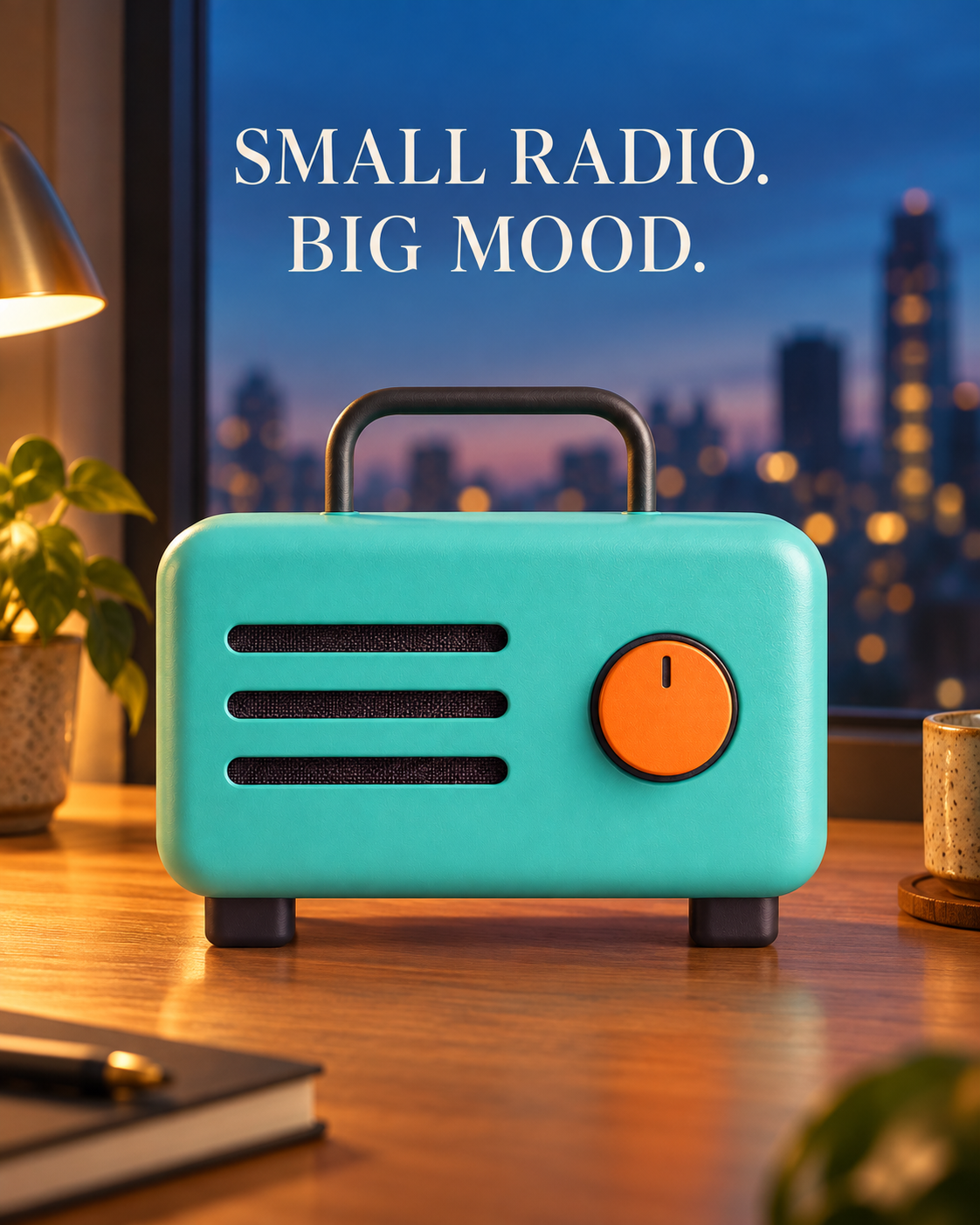
A simple product image became an atmospheric campaign concept: a turquoise radio on a wooden desk, an evening skyline and the headline “SMALL RADIO. BIG MOOD.” The useful question is what changed besides the setting.
The experiment
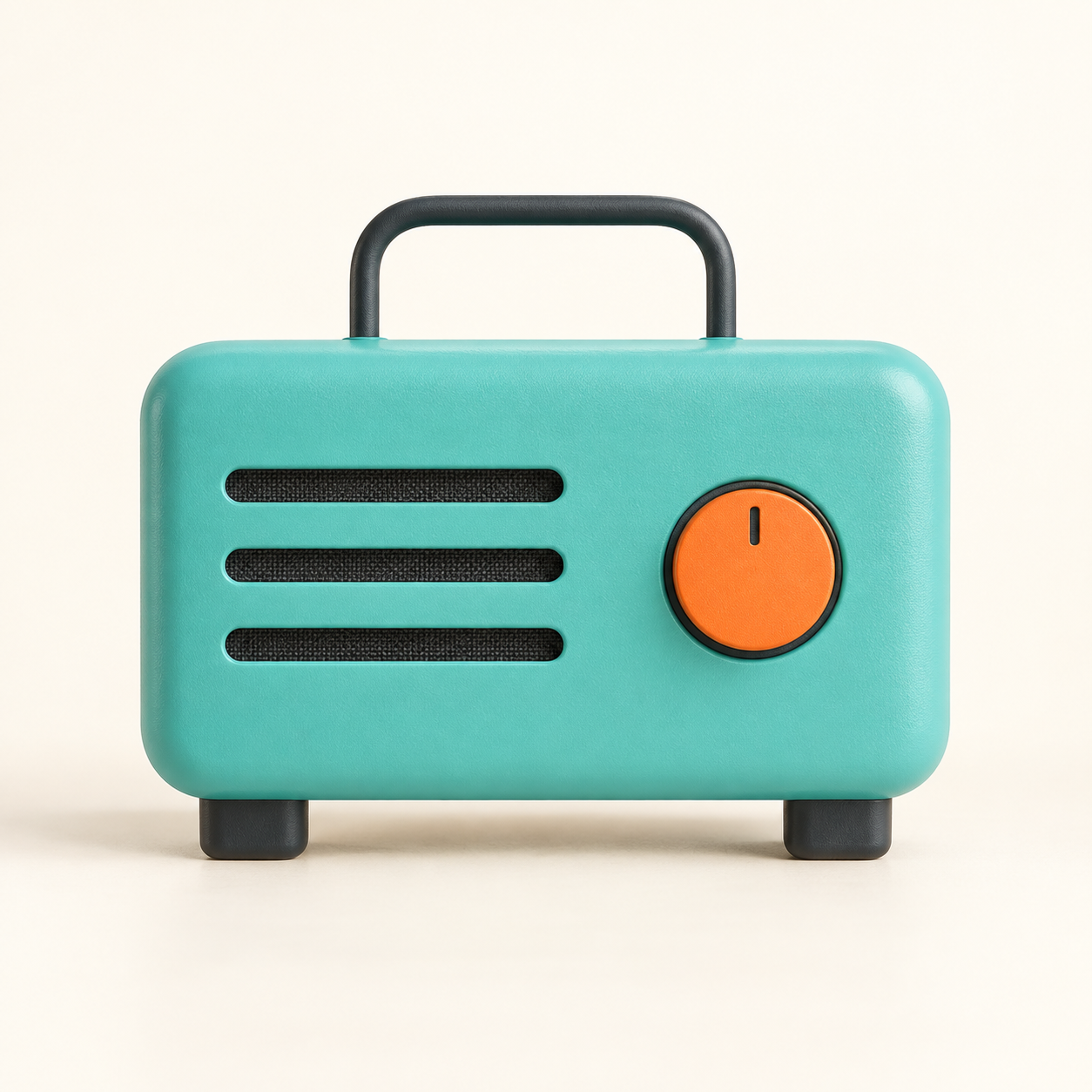
We reused the untouched first AI-generated radio image from our earlier sketch experiment. It depicts a fictional product, not a photographed or manufactured radio. We supplied that image to the built-in OpenAI image tool with one editing prompt and kept the first returned result. There was no retouching or selection from multiple attempts in this experiment.
Before generation, we specified three speaker slots on the left, one orange dial on the right, a handle, two feet and the exact two-line headline. We also described the desk, evening window and warm light coming from a lamp outside the frame. The complete prompt and original files are included below.
What held up
The result visibly retains the three slots, orange dial, top handle and two feet. Both headline lines match our requested spelling and punctuation. The scene and typography were produced in the same image-generation request; we did not add the headline afterwards.
This is preservation of recognizable design features, not proof of unchanged geometry. Lighting, apparent texture, scale and surroundings differ. We did not measure dimensional accuracy or compare aligned pixels.
A visible miss
The prompt asked for light from a lamp outside the frame. A lampshade is nevertheless visible at the left edge of the returned image. It fits the atmosphere, but it does not follow that instruction. A polished image can make this kind of mismatch easy to overlook.
For a real product workflow, check shape, controls, labels and factual product details before using a generated scene. This fictional demonstration establishes no suitability guarantee for real advertising.
Why we tried it
OpenAI’s September 8 announcement of ChatGPT Images 2.5 describes improved preservation of reference subjects across new settings. That is the context for our experiment, not independent confirmation of the company’s comparison. The built-in tool did not expose its exact model identifier, so we are not calling this a named-model test. Read the official announcement.
One request gives us an inspectable example, not a reliability score. The practical method is simple: state what must stay, state what may change, then inspect the result against both lists.
Experiment and source check: 29 September 2026. Both reference and result are AI-generated; the fictional design originates in REVL’s own code-drawn sketch. English video narration is synthetic.
Inspect the original files
Full reference image · Full first output · Experiment record
The complete prompt
Edit the attached reference image into ONE polished editorial advertising concept. The reference is an original fictional AI-generated turquoise desk radio, not a real manufactured product. Preserve the radio's identity and front-facing design: exactly three horizontal dark speaker slots on the viewer's left, exactly one orange circular dial on the viewer's right, one arch-shaped handle above, exactly two dark feet below, and the turquoise body. Do not add controls or change its design. Place the entire radio clearly visible on a warm wooden desk beside a large window at blue hour. Soft warm lamplight from outside the frame illuminates the product; a softly blurred deep blue evening city view behind it. Premium restrained product photography, cinematic but believable lighting, strong turquoise and orange color harmony, sophisticated art direction. Portrait 4:5 composition. Keep the product large and all structural parts unobstructed. In the clean upper third add ONLY the following exact two lines of elegantly typeset ivory headline text: "SMALL RADIO." then "BIG MOOD." No quotation marks in the image. No other text, brand names, logos, badges, watermarks, people, extra radios or added product features. This is a fictional concept campaign, not a real advertisement or a factual product claim.
REVL / AI IN PRACTICE
AI, clearly explained.
Original illustrations, practical demonstrations and sources you can inspect.